What Is the Biggest Mystery in Space?
At the forefront of cosmic inquiry lies the enigmatic enigma of dark matter, a mysterious entity that continues to elude scientific comprehension. Despite its intangible nature, dark matter exerts a gravitational influence on visible matter, constituting a staggering 85% of the universe’s mass. Mystery in space surrounds the elusive substance, defying conventional detection methods and confounding scientists in their quest to unveil its composition and origins. The search for answers to this cosmic conundrum drives ongoing research and experimentation as astrophysicists endeavor to unlock the secrets of the universe’s hidden framework. With each exploration into the depths of space, humanity inches closer to unraveling the mysteries that shape our understanding of existence and the cosmos, casting light upon the enigmatic realms that lie beyond our current grasp.
What Is the Darkest Secret of the Universe?
Dark energy, uniformly spread across the cosmos, persists unchanged over time and space. Its influence remains undiluted despite universal expansion, exhibiting a global impact rather than localized gravitational effects. This even distribution signifies dark energy’s pervasive reach, shaping the universe’s dynamics on a grand scale and offering insights into the fundamental forces driving cosmic evolution and expansion.
What Is the Biggest Danger in Space?
Space radiation poses the greatest challenge for Mars missions due to its invisible nature. Despite being imperceptible, it’s one of spaceflight’s most hazardous elements. Understanding and mitigating this stealthy threat are critical for ensuring astronaut safety on the daunting journey to the Red Planet and back.
What Is Rare in Space?
Most galaxies are classified as spiral, elliptical, or irregular. The rarest, ring galaxies, comprise just 1 in 10,000. First discovered in 1950 with Hoag’s object, they feature a dense core of old stars encircled by a ring of bright, young stars. Recent observations reveal their formation processes, shedding light on their origins.
What Is the Mystery of Black Holes?
A black hole is so dense that gravity just beneath its surface, the event horizon, is strong enough that nothing, not even light, can escape. The event horizon isn’t a surface like Earth’s or even the Sun. It’s a boundary that contains all the matter that makes up the black hole.
How Is Space Infinite?
In a non-curved space, objects neither converge nor diverge. A flat universe may extend infinitely, akin to an endless 2D sheet. Alternatively, it could be finite, resembling a torus created by joining the ends of a cylindrical piece of paper, illustrating the universe’s potential geometrical variations.
Do White Holes Exist?
The negative square root solution inside the horizon represents a white hole. A white hole is a black hole running backwards in time. Just as black holes swallow things irretrievably, so do white holes spit them out. White holes cannot exist since they violate the second law of thermodynamics.
Can We Exist in Black Hole?
A cosmologist explains the mind-bending hypothesis that our universe could have branched off from a black hole singularity in another universe. We do not live inside a black hole, but that does not rule out the possibility that our universe was born from one.
What Is the Mystery in Space?
The vast majority of the material content of the universe is really composed of mysterious non-baryonic particles. And then there’s dark energy. It has a catchy name, but no one knows what it is. In 1998, astronomers discovered that the current expansion rate of the universe is larger than it was a few billion years ago.
Which Place Is Called Space?
Outer space delineates the realm beyond a planet’s atmosphere, commencing approximately 100 kilometers (62 miles) above sea level for Earth. The boundary marking the division between the atmosphere and outer space is known as the Karman line, serving as a crucial demarcation for space exploration and scientific inquiry.
What Is the Biggest Mystery in Space?
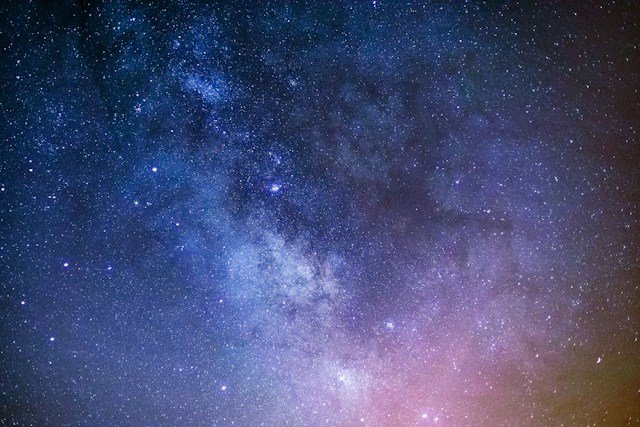
Fatured Photo by Andy Holmes on Unsplash