How Does Female Bodybuilding Differ From Male Bodybuilding?

Female bodybuilding is one of the most misunderstood fitness pursuits on the planet. Women are told they’ll “get bulky,” lose their femininity, or damage their hormones and almost none of it is true. The reality? Strength training and bodybuilding for women is one of the most science-backed, body-transforming, confidence-building things you can do.
But the internet is full of half-truths and bro-science recycled for female audiences. So let’s cut through the noise. Below are the 10 questions women actually search before stepping into the weight room answered honestly, thoroughly, and without the fluff.
Q1: Will Female Bodybuilding Make Me Look “Too Bulky” or Masculine?
This is the #1 fear holding women back and it’s rooted in a complete misunderstanding of female physiology.
Women produce roughly 15–20 times less testosterone than men. Testosterone is the primary anabolic hormone responsible for large muscle mass development. Without pharmaceutical intervention (steroids or exogenous hormones), women simply cannot build the same volume of muscle tissue that male bodybuilders develop.
What female bodybuilding actually does to your body:
- Increases muscle definition and tone – creating that “sculpted” look most women actually want
- Reduces body fat percentage – muscle is metabolically active tissue; more muscle = higher resting metabolism
- Improves posture and body proportions – broader shoulders, stronger glutes, more defined waist create an hourglass silhouette
- Adds density and shape – not bulk, but curvature
The “bulky” women you see in extreme bodybuilding competitions? They’ve trained for years, follow precise nutrition protocols, and in many cases use performance enhancing substances. That outcome doesn’t happen accidentally or quickly. No, female bodybuilding does not make most women look masculine or bulky. Due to low testosterone levels, women build lean muscle definition rather than excessive mass. The “bulky” appearance seen in professional competitions typically requires years of training and often hormonal assistance.
Q2: How Is Female Bodybuilding Different From Male Bodybuilding?
The goal may look similar build muscle, reduce fat, improve physique but the biological, hormonal, and strategic differences are significant.
Key Differences:
| Factor | Female Bodybuilding | Male Bodybuilding |
|---|---|---|
| Testosterone | 15–20x lower | High natural levels |
| Muscle gain speed | Slower (months vs weeks) | Faster |
| Fat distribution | Hips, thighs, chest (estrogen-driven) | Abdomen |
| Recovery | Faster per some studies due to estrogen’s anti-inflammatory effect | Slower |
| Caloric needs | Generally lower | Higher |
| Hormonal sensitivity | More cycle-dependent | More stable |
Women also need to train and eat around their menstrual cycle for optimal results something the male-dominated fitness world rarely addresses. Your hormonal phases (follicular, ovulatory, luteal, menstrual) directly impact strength, endurance, recovery, and even injury risk.
For example, during the follicular phase (days 1–14), estrogen rises and women typically experience higher strength and energy ideal for heavy compound lifts. During the luteal phase (days 15–28), progesterone dominates, reducing performance capacity. Pushing through heavy training in this window without managing recovery leads to plateau and burnout.
Q3: What Should a Female Bodybuilding Diet Look Like?
Nutrition is where most women either under-eat (sabotaging muscle growth) or over-restrict (triggering metabolic adaptation). Both extremes kill progress.
The Foundational Framework:
Protein – The Non-Negotiable
Aim for 1.6–2.2g of protein per kilogram of body weight daily. This supports muscle protein synthesis (MPS) the process that actually builds muscle. Women frequently undereat protein, mistakenly prioritizing calorie reduction over macronutrient quality.
Best sources: chicken breast, eggs, Greek yogurt, salmon, cottage cheese, lentils, tempeh, whey protein.
Carbohydrates – Fuel, Not Enemy
Carbs are your primary workout fuel. Cutting them entirely kills training performance. A female bodybuilder in a muscle-building phase should consume 3–5g of carbs per kg of bodyweight, adjusted for training intensity.
Time carbs around workouts: complex carbs (oats, rice, sweet potato) 1–2 hours pre-workout; fast carbs (banana, rice cakes) immediately post-workout to spike insulin and drive nutrient uptake.
Fats – Hormonal Health Depends On It
Women who drop fat intake below 20% of total calories often experience hormonal disruption irregular periods, low estrogen, reduced bone density. Healthy fats (avocado, olive oil, nuts, fatty fish) are essential for estrogen production and overall hormonal balance.
Bulking vs. Cutting Phases
Female bodybuilders cycle between:
- Muscle-building phase (caloric surplus): Eating 200–400 calories above maintenance to support hypertrophy
- Cutting phase (caloric deficit): Eating 300–500 calories below maintenance to reduce body fat while preserving muscle
Women should keep deficits moderate. Aggressive cuts lead to muscle loss, not just fat loss. A female bodybuilding diet centers on high protein intake (1.6–2.2g per kg of bodyweight), adequate carbohydrates for energy, and sufficient healthy fats for hormonal health. Most female bodybuilders cycle between muscle-building phases (slight caloric surplus) and cutting phases (moderate deficit) to gain lean mass without excess fat.
Q4: How Long Does It Take for Women to See Results From Bodybuilding?
Here’s the realistic timeline most fitness influencers won’t give you:
Weeks 1–4: Neurological adaptations. Your nervous system learns to recruit muscle fibers more efficiently. Strength increases noticeably even before visible muscle change.
Weeks 4–8: First visible changes. Muscle definition begins to emerge, particularly in arms, shoulders, and upper back. Body composition improves even if scale weight doesn’t dramatically shift.
Months 3–6: Noticeable physique transformation. Clear muscle separation, improved posture, reduced body fat in trained areas. Friends start noticing.
Year 1–2: Significant body recomposition. This is where female bodybuilders start developing a truly distinctive physique defined quads, rounded glutes, sculpted back.
3+ Years: Advanced development. The kind of physique you see on stage at natural bodybuilding competitions typically takes 3–5 years of consistent, progressive training.
The single biggest driver of results? Progressive overload consistently increasing the challenge on your muscles through more weight, more reps, or reduced rest over time.
Q5: What Are the Best Exercises for Female Bodybuilding?
Not all exercises are created equal. For female bodybuilders, the priority is compound movements that maximize muscle recruitment, hormonal response, and caloric expenditure.
Tier 1: The Non-Negotiable Compound Lifts
- Squats – King of lower body development; targets glutes, quads, hamstrings, core
- Romanian Deadlifts (RDLs) – Posterior chain builder; unmatched for glute and hamstring development
- Hip Thrusts – Glute activation superior to squats for many women; directly targets the gluteus maximus
- Bench Press / Push-Ups – Chest, shoulders, triceps development
- Pull-Ups / Lat Pulldowns – Back width, creating the V-taper and waist illusion
- Overhead Press – Shoulder development; creates the “capped” shoulder look
Tier 2: Isolation Work for Detail
- Leg Curls – Hamstring isolation
- Cable Glute Kickbacks – Glute detail
- Lateral Raises – Medial delt development
- Bicep Curls / Triceps Extensions – Arm shaping
- Face Pulls – Rear delts and rotator cuff health
Training Frequency
Most female bodybuilders train 4–5 days per week using an Upper/Lower split or a Push/Pull/Legs (PPL) structure. Full-body training 3x/week works well for beginners.
Q6: Does Female Bodybuilding Affect Hormones or Menstrual Cycle?
Yes and this cuts both ways. Done correctly, resistance training improves hormonal health. Done excessively or with severe caloric restriction, it can disrupt the menstrual cycle.
Positive Hormonal Effects of Strength Training in Women:
- Improves insulin sensitivity (critical for PCOS management)
- Increases IGF-1 (insulin-like growth factor), supporting muscle growth
- Reduces cortisol over time (if training load is managed)
- Increases growth hormone release during and after heavy lifting sessions
- Improves estrogen metabolism linked to reduced breast cancer risk
Warning Signs of Overtraining / Under-Fueling:
- Irregular or absent periods (amenorrhea)
- Persistent fatigue and mood disruption
- Declining strength despite consistent training
- Hair thinning
- Chronic joint pain
This cluster of symptoms is known as Relative Energy Deficiency in Sport (RED-S) formerly called the “Female Athlete Triad.” It occurs when energy expenditure significantly outpaces energy intake, causing the body to down-regulate reproductive and metabolic functions. The fix is almost always: eat more, train smarter (not harder), and prioritize sleep.
Female bodybuilding can positively affect hormonal health by improving insulin sensitivity, boosting growth hormone, and reducing chronic cortisol levels. However, excessive training combined with severe caloric restriction can cause hormonal disruption and menstrual irregularity a condition called Relative Energy Deficiency in Sport (RED-S). Adequate fueling is essential.
Q7: Can Women Over 40 Do Bodybuilding?
Not only can they women over 40 arguably have more to gain from bodybuilding than younger women. Here’s why this matters more after 40:
Muscle Loss: After age 30, women lose approximately 3–5% of muscle mass per decade (sarcopenia). After menopause, this accelerates. Resistance training is the most effective intervention for sarcopenia far more effective than any supplement or dietary strategy alone.
Bone Density: Estrogen decline post-menopause accelerates bone loss, increasing osteoporosis risk. Weight-bearing resistance training is clinically proven to increase bone mineral density (BMD), reducing fracture risk.
Metabolic Rate: Muscle tissue burns calories at rest. Preserving and building muscle in your 40s, 50s, and beyond directly combats the metabolic slowdown associated with aging.
Body Composition: Post-menopausal women experience a shift in fat distribution from peripheral (hips, thighs) to central (abdomen) which increases cardiovascular risk. Resistance training counteracts this shift more effectively than cardio alone.
Adjustments for Women Over 40:
- Prioritize recovery – extend rest periods between sessions (48–72 hours per muscle group)
- Increase warm-up duration – joint mobility becomes more critical
- Emphasize protein intake – older muscles require more protein to trigger MPS at the same rate
- Monitor joint health – modify exercises as needed (e.g., box squats over full depth back squats if knee issues are present)
Q8: What Are the Different Female Bodybuilding Competition Categories?
If competition is on your radar, knowing your category matters. Female bodybuilding competitions are divided into several distinct divisions, each judging a different physique standard.
Bikini
The most popular entry point. Judges look for a lean, toned physique with soft muscle definition not extreme muscularity. Emphasis on symmetry, presentation, and stage presence. Ideal for beginners.
Figure
A step above bikini. Requires more noticeable muscle separation and conditioning. Judges look for an athletic, symmetrical V-taper with defined but not striated muscles.
Wellness
One of the fastest-growing divisions. Emphasizes lower body development glutes, hamstrings, quads with a smaller upper body. Reflects the modern fitness aesthetic popularized on social media. For additional inspiration, explore these powerful mental health quotes that promote wellness and self-growth
Physique
Requires significant muscularity and conditioning. More muscle than Figure, but less than classic Bodybuilding. Striated muscle separation is expected.
Women’s Bodybuilding
The most extreme category maximum muscularity, deep conditioning, visible muscle striations. Judges evaluate muscle mass, symmetry, and presentation. This is the category associated with the “muscular” look most people picture when they hear “female bodybuilder.” Most natural federation competitions (NPC, WNBF, OCB) offer all these categories. Bikini and Wellness are currently the most competitive and fastest-growing divisions globally.
Q9: How Should Beginners Start Female Bodybuilding?
The most common beginner mistake? Jumping into a 5-day advanced program after watching three YouTube videos. Here’s what actually works.
Step 1: Master Movement Patterns First (Weeks 1–4)
Before loading weight, learn the foundational movement patterns: squat, hinge, push, pull, carry. Poor form under load leads to injury, not progress. Start with bodyweight squats, glute bridges, push-ups, rows, and planks. Focus on mind-muscle connection feeling the targeted muscle working, not just completing the motion.
Step 2: Follow a Structured Beginner Program (Months 1–3)
Use a proven beginner program rather than random workouts. Recommendations:
- Strong Lifts 5×5 (adapted) – foundational strength
- PHUL (Power Hypertrophy Upper Lower) – blends strength and muscle-building
- Bret Contreras’ Strong Curves – specifically designed for women, glute-emphasis
Step 3: Track Progressive Overload
Keep a training log. Every 1–2 weeks, increase weight by the smallest increment available (usually 2.5–5 lbs). If you can’t add weight, add a rep. If you can’t add a rep, reduce rest time. Progress must be intentional.
Step 4: Get Protein Dialed In
Start tracking protein intake. Aim for at least 1.6g per kg of bodyweight daily. This single dietary change is often the biggest lever for beginners.
Step 5: Prioritize Sleep
Muscle is built during sleep, not during training. Training is the stimulus; sleep is where adaptation happens. Target 7–9 hours nightly. Chronic sleep deprivation significantly impairs both muscle protein synthesis and fat metabolism.
Q10: What Supplements Should Female Bodybuilders Take?
The supplement industry is a multi-billion dollar market built largely on overcomplicated solutions to simple problems. Most women need far fewer supplements than they’re sold.
Tier 1: Evidence-Based Essentials
Creatine Monohydrate The most researched supplement in sports nutrition. Women respond to creatine exceptionally well it increases phosphocreatine stores in muscle, directly improving strength output and muscle volume. Dose: 3–5g daily. No loading phase required.
Whey Protein (or Plant Protein) A convenient tool to hit daily protein targets not a magic muscle builder. Use it to supplement food-based protein, not replace it. Dose: 20–30g per serving post-workout.
Vitamin D3 + K2 Most women are deficient. Critical for calcium absorption, bone density, immune function, and muscle function. Dose: 2000–4000 IU D3 daily with K2 (100–200mcg) for optimal calcium utilization.
Magnesium Glycinate Supports sleep quality, muscle recovery, and hormonal balance. Many women are deficient. Dose: 200–400mg before bed.
Tier 2: Conditionally Useful
- Omega-3 (Fish Oil / Algae Oil): Anti-inflammatory; supports joint health and hormonal balance
- Caffeine: Proven ergogenic aid for strength and endurance; use pre-workout judiciously
- Beta-Alanine: Buffers lactic acid; useful for high-rep training; causes harmless tingling sensation
What to Skip
Pre-workouts loaded with proprietary blends, “fat burners,” hormone-boosting supplements, and anything with unverified claims. Most are overpriced stimulants with minimal evidence. The most evidence-based supplements for female bodybuilders are creatine monohydrate (3–5g daily), protein powder to meet daily targets, Vitamin D3 with K2, and magnesium glycinate. Most other supplements marketed to women lack strong clinical evidence and aren’t necessary for results.

Additional FAQs
Q: Can female bodybuilders have a social life and eat out? Yes. Competitive bodybuilders use flexible dieting (IIFYM- If It Fits Your Macros), which allows restaurant meals as long as macronutrient targets are met. Strict meal-prep approaches are one option, not the only option.
Q: Is it safe to body build during pregnancy? Light to moderate resistance training is generally considered safe in uncomplicated pregnancies, but intensity and exercise selection must be adjusted each trimester. Always consult an OB-GYN before continuing or starting training during pregnancy.
Q: Do I need a personal trainer to start bodybuilding? Not necessarily, but a coach or trainer accelerates learning and reduces injury risk significantly, especially in the first 3–6 months. At minimum, invest in one or two form-check sessions.
Q: How much does cardio matter in female bodybuilding? Cardio supports fat loss during cutting phases and improves cardiovascular health. Most female bodybuilders use 3–4 sessions of low-intensity steady-state (LISS) cardio per week during a cut, and minimal cardio during muscle-building phases to preserve caloric surplus.
Q: Can female bodybuilders compete naturally (without steroids)? Yes, natural bodybuilding federations (WNBF, OCB, INBA) specifically test for performance-enhancing drugs and provide a competitive environment for drug-free athletes.
Conclusion
Female bodybuilding isn’t about becoming someone else, it’s about building the strongest, most capable version of yourself. The myths about bulkiness, hormonal damage, and masculinity crumble the moment you look at the actual science. Whether you’re picking up weights for the first time or eyeing your first competition stage, the framework is the same: progressive overload, adequate protein, hormonal awareness, and consistent recovery.
Everything else is detail. The women who thrive in this sport aren’t genetically gifted outliers. They’re consistent, patient, and willing to trust the process longer than most people quit. Start lifting. Track your progress. Fuel properly. And remember the question was never whether you could do this. It was always just when you’d begin.
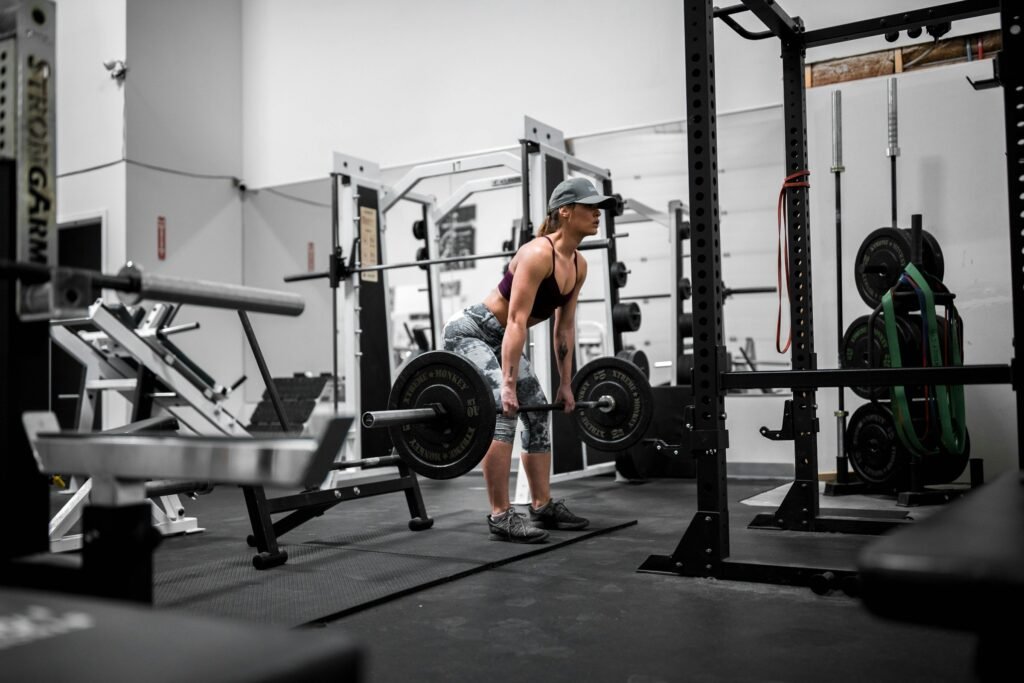
Photo by Anastase Maragos on Unsplash